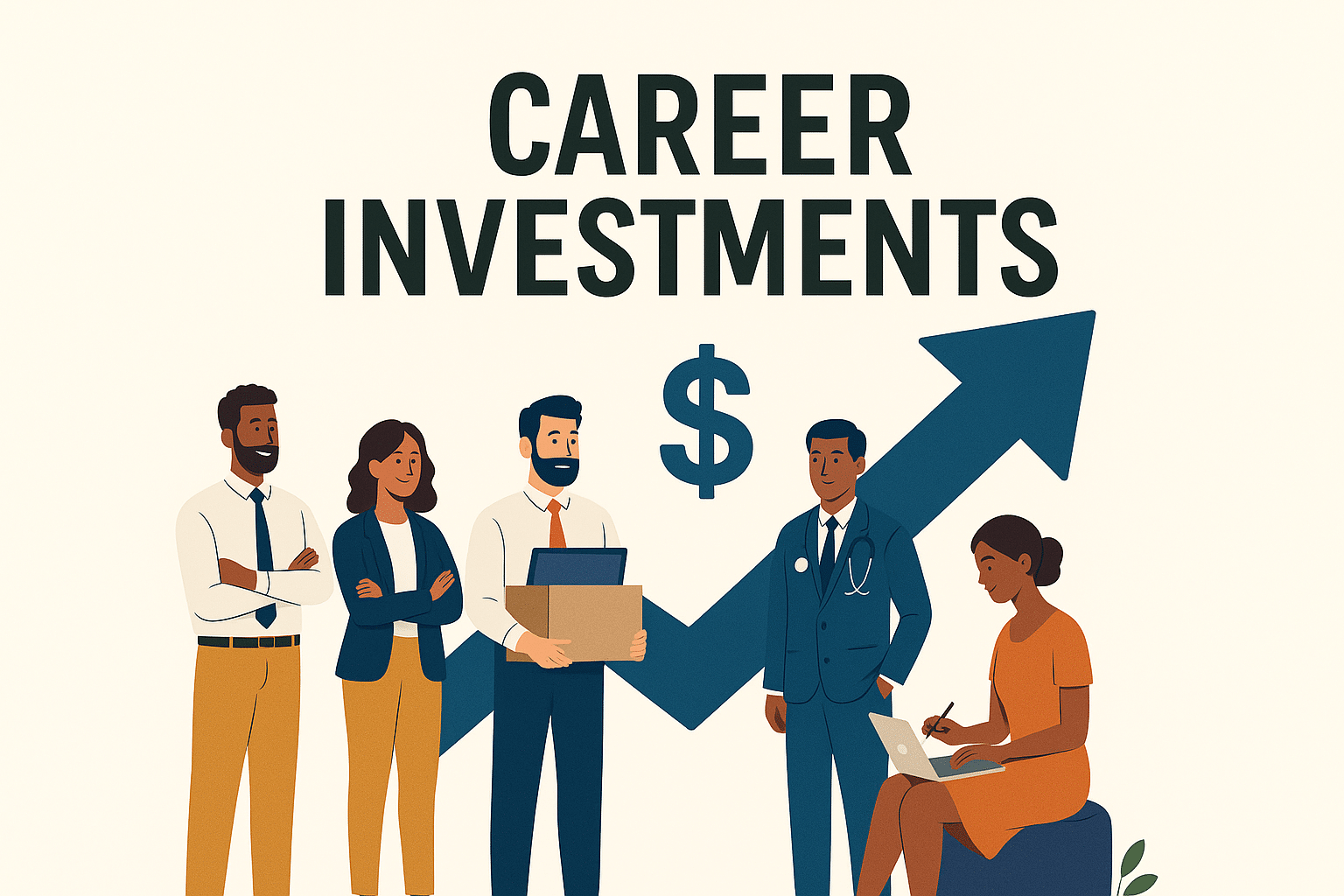
Career investments aren’t just about putting in hours—it’s about making smart choices that actually move the needle. Whether it’s earning a degree, getting a professional certification, attending hands-on training, or diving into real-world experience, the right career investment can open doors you didn’t even know existed. But here’s the catch: not all investments pay off the same way. That’s where career ROI comes in—knowing which moves give you the biggest bang for your time, energy, and money.
To help you cut through the noise, we spoke with 25 experts from a wide range of industries, asking them to share the one career investment that delivered the highest return for them. From tech to healthcare, finance to creative fields, they revealed what truly works—and why.
Inside this article, you’ll find actionable insights on career development you can start using today. Discover which high-return skills and best certifications can fast-track your growth, boost your confidence, and make your professional journey more rewarding. Consider it your guide to making smarter, more impactful career moves.
Degrees & Formal Education With High ROI
Some experts found that their most powerful career investments weren’t flashy or trendy — they were the degrees that quietly reshaped the way they showed up in their work. Programs like counseling psychology, an education master’s, a data science master’s, chartered marketing qualifications, and advanced psychiatric training gave them depth, credibility, and a solid professional backbone. What they appreciated most wasn’t just the diploma; it was the way rigorous academic environments pushed them to think differently, work smarter, and understand people on a deeper level. Those skills continue to pay off years later, often becoming the foundation for leadership roles, specialized expertise, and long-term career stability.
Degrees That Pay Off: Real ROI from Expert Experience
| Investment | Expert | ROI Snapshot | Decision Trigger |
|---|---|---|---|
| Amazon Security System / Loss Prevention Program | Joshua McAfee | Built global systems, founded McAfee Institute | High-stakes personal responsibility |
| Master’s in Counseling Psychology | Beth Southorn | Housing retention jumped from 70% → 98.3% | Needed clinical frameworks |
| Master’s in Education | Peter Panopoulos | Built tutoring business with personalized learning plans | Saw classroom gaps |
| Data Science Expertise | Venkata Naveen Reddy Seelam | Led AI & modernization programs | Saw data-driven industry need |
| Chartered Marketer Status | Ricci Masero | Elevated credibility & salary negotiations | Needed recognition beyond design |
| Career Assessment & Coaching Program | Miriam Groom | Provided clarity on strengths & career direction; redirected entire career trajectory | Needed self-knowledge to avoid wrong investment |

Amazon Security System: High-Risk Role Became Career-Defining Investment – Joshua McAfee
– Joshua McAfee, CEO & Founder, McAfee Institute
I built Amazon’s Loss Prevention program from scratch. I had zero playbook, zero precedent for what we needed at that scale. The investment wasn’t tuition–it was choosing to step into chaos with no map and betting I could create systems that would protect billions in assets.
The return showed up in two ways nobody talks about. First, the program itself worked–we built something that scaled globally and still runs today. But second, that experience became my entire curriculum foundation. Every investigation technique, every threat analysis framework, every training module at McAfee Institute traces back to problems I actually solved under fire, not theories from a textbook.
I knew it was right because I was terrified. When you’re building something that’s never existed before, there’s no “safe” investment. You’re either all in or you’re wasting time. That fear meant the stakes were real enough to force me to develop skills I couldn’t have learned any other way.
The pattern I saw: the highest ROI comes from investments where failure costs you personally. Not your company’s money, not your boss’s reputation–yours. That’s when you stop learning and start evolving. That’s what I built McAfee Institute around–training that puts real career stakes on the line, because that’s the only kind that actually transforms people.

Master’s in Counseling Psychology Boosts Housing Retention Success
– Beth Southorn, Executive Director, LifeSTEPS
My Master’s in Counseling Psychology from Notre Dame de Namur University, hands down. But here’s the thing–I got it after already working at Mills/Peninsula Hospital with people in crisis. That timing was everything.
The degree gave me clinical frameworks to understand why our housing retention kept failing (it was hovering around 70% back then). I learned trauma-informed approaches weren’t just therapy buzzwords–they were the missing piece for formerly homeless residents who’d bolt at the first conflict with a neighbor. We rebuilt our entire service model around those principles, and our retention jumped to 98.3%.
The ROI is measurable: we now serve 36,000+ homes because property owners trust us not to lose tenants. Every percentage point in retention saves them thousands in turnover costs, which means they keep hiring us to expand into new buildings.
I knew it was the right investment because I was already drowning in situations I couldn’t solve with just compassion. When a veteran with PTSD trashed his first stable apartment in years, I needed to understand the neuroscience of triggers–not just feel bad about it. That knowledge now protects 100,000+ residents from cycling back into homelessness.

Education Master’s Shapes Successful Tutoring Business Model
– Peter Panopoulos, Owner, A Traveling Teacher Education LLC
My Master’s in Education from Lesley University was absolutely worth it–but not for the reasons I expected. I went in thinking I’d learn better teaching methods, and I did. But the real ROI came from the program forcing me to research how students actually learn, particularly around executive functioning and personalized instruction strategies.
When I launched A Traveling Teacher after 8+ years teaching middle school math, that research became the foundation of our entire business model. We don’t just tutor–we create individualized learning plans based on cognitive science, not generic curricula. That differentiation is why families stay with us long-term and why we’ve grown from just me to a full team of certified teachers.
I knew it was the right investment because I was already in the classroom seeing kids struggle with one-size-fits-all approaches. The Master’s program gave me the theoretical framework to understand *why* my one-on-one interventions were working when whole-class instruction wasn’t. When you can explain to parents exactly how we’ll help their kid and back it up with research, they trust you immediately.
The degree cost about $30K total, but it’s generated hundreds of thousands in revenue because it shaped our entire service philosophy–confidence-focused, truly personalized tutoring that actually works.
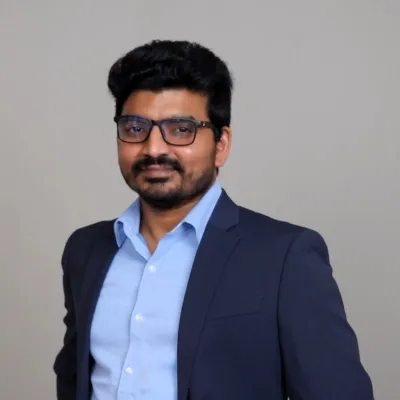
Data Science Expertise Bridges Industry Gaps
– Venkata Naveen Reddy Seelam, Industry Leader in Insurance and AI Technologies, PricewaterhouseCoopers (PwC)
The best career investment for me was enrolling in a master’s program focused on data science and pursuing insurance and AI certifications during my job. The master’s program helped me build a strong foundation in data, cloud architecture, and system design. The certifications, which included insurance domain, advanced analytics, and applied AI, helped me use what I learned to solve real problems at work.
I chose this path because I saw the insurance industry heading toward a data-driven future, but talent capable of bridging legacy systems with modern AI and cloud models was scarce. That combination allowed me to lead large-scale modernization programs, guide risk-sensitive AI adoption, and speak fluently with both business and technical stakeholders.
The biggest benefit was more than just technical skill. It was gaining both credibility and the ability to deliver results. My takeaway is to seek education that builds strong fundamentals, then add skills that fit where your industry is headed, not just where it stands now.

Chartered Marketer Status Transforms Professional Credibility
– Ricci Masero, EdTech Evangelist & AI Wrangler | eLearning & Training Management, Intellek
The highest return career investment I made was joining the Chartered Institute of Marketing and working toward becoming a Chartered Marketer. It wasn’t a quick weekend course – it took years of professional development, peer review, and demonstrating real marketing expertise through my work.
I was tired of marketing being treated as the “colouring in department”. Too many people think marketing is just about making things look pretty or posting on socials. I wanted recognition that what I do requires strategic thinking, business acumen, and measurable impact on company growth.
The chartered status changed how I’m perceived in business conversations. When I’m in the room with finance directors or operations managers who have their professional qualifications, I’m not just “the marketing person” anymore. I’m a chartered professional with recognized expertise, and that shifts the dynamic entirely. People listen differently when you’ve got the credentials to back up your strategic recommendations.
Beyond the letters after my name, the process itself made me a better marketer. The continuous professional development requirements mean I’m constantly learning, staying current, and challenging my own assumptions. I can’t coast on what worked five years ago.
The return on investment shows up in business relationships, salary negotiations, and the respect I get when presenting marketing strategies to the board. It proved to others (and honestly to myself) that marketing is a serious business discipline that deserves a seat at the strategic table.

Chartered Marketer Status Transforms Professional Credibility
– Miriam Groom, BComm., M.Psych., R.N.T. CEO, Mindful Career Counselling
In the high-stakes world of career planning, we’re constantly told to “follow your passion” or “build in-demand skills.” But what happens when you don’t know what you’re truly passionate about—or worse, when you invest time and money chasing the wrong thing? Early in my career, I found myself overwhelmed by options, paralyzed by the fear of making the wrong choice. That’s when I made the single most valuable investment of my professional life: a comprehensive, psychology-based career assessment and coaching program.
At the time, I was a few years into working in marketing, but something always felt off. I was good at my job, but not lit up by it. I kept jumping from role to role, thinking maybe the next job would be the one. Instead of guessing, I decided to treat my career like a business strategy: research, data, and alignment. That’s what led me to invest in a professional psychometric testing and coaching program—one that analyzed my personality type, values, cognitive style, motivators, and career interests using tools like MBTI, Strong Interest Inventory, and Holland Codes.
The results were eye-opening. I learned I was wired not just for creative problem-solving, but for coaching, strategy, and systems-building—areas I hadn’t fully explored before. With a coach’s guidance, I mapped my strengths to industries and roles I had overlooked, including career development, people operations, and behavioral consulting. From there, I pursued targeted certifications in coaching and organizational psychology, and later, training in digital tools to apply those skills in real business settings.
The lesson? Before you chase the next hot skill or expensive credential, invest in knowing yourself. A one-time assessment and coaching program gave me the clarity I couldn’t find in a thousand job posts or social media scrolls. It redirected my entire career trajectory—and it’s a framework I still use today, both for myself and in mentoring others.
In conclusion, the highest return on investment doesn’t always come from the most prestigious school or trending certification. Sometimes, the smartest move is to pause and get clear on who you are. That single investment in self-knowledge saved me years of trial and error—and gave me a foundation for everything that came next.
Certifications That Transformed Careers
For others, the game-changing career investments came through certifications that delivered impact fast. Whether it was becoming an LCDC addiction counselor, learning discernment counseling, diving into UX research training, or pursuing executive coaching, these credentials didn’t just sit on a résumé — they opened doors. Many experts said these certifications helped them sharpen their voice, take on more meaningful work, and expand into roles they didn’t even realize they could pursue. Because the training is highly focused, the return often shows up immediately: more confidence, clearer direction, and opportunities that previously felt out of reach.
Certifications With Immediate and Lasting Impact
| Certification | Expert | ROI Snapshot | Decision Trigger |
|---|---|---|---|
| Addiction Counselor Certification (LCDC) | Holly Gedwed | Doubled effectiveness with clients | Gaps in trauma + addiction care |
| Specialized Counseling Certification | Dan Jurek | Referrals tripled, unique niche | Needed a gap-filling skill |
| Interventional Psychiatry Training | Peyman Tashkandi | Expanded treatment options | Emerging modality |
| Executive Coaching | Anne Gillaspie | Identified personal barriers, boosted business growth | Plateaued business |
| Leadership Workshops | Arsen Misakyan | Reduced friction, happier staff, better client outcomes | Business at tipping point |
| Dementia Practitioner Certification | Tanner Gish | Deepened expertise in senior care | Aging population need |
| Massage Therapy License | Erin Ruddy | Developed presence, empathy, and meaningful client connections | Passion + long-term purpose |

Addiction Counselor Certification
– Holly Gedwed, Owner, Southlake Integrative Counseling and Wellness
Getting my LCDC (Licensed Chemical Dependency Counselor) certification after already practicing for several years was the game-changer. I was already working with clients who had anxiety and depression, but kept hitting walls when substance use was in the picture–which was about 60% of my trauma cases.
The LCDC training taught me how addiction literally rewires the brain’s reward system, which explained why my CBT techniques alone weren’t sticking. I learned to layer in specific interventions for cravings and relapse prevention before diving into trauma work. One client who’d been cycling through therapists for 8 years finally broke free from cocaine dependence because I could address both the addiction and her childhood trauma simultaneously instead of treating them as separate issues.
I knew it was the right investment when three clients relapsed within the same month despite our progress on their depression and PTSD. I was missing the specialized knowledge to treat co-occurring disorders, and people were suffering for it. Now I can customize treatment that actually addresses the root cause–whether someone drinks because they’re anxious, or they’re anxious because withdrawal keeps their nervous system dysregulated.
The certification doubled my effectiveness with the populations I serve most. Clients stay in treatment longer and don’t bounce back to my office after 30-day rehab stints wondering why they still feel broken.

Specialized Counseling Certification
– Dan Jurek, M.A., LPC-S, LMFT-S, Professional Counselor, Pax Renewal Center
Getting certified in Discernment Counseling through the Doherty Relationship Institute. At the time, I’d been practicing for years and kept seeing couples show up in my office where one person had already mentally filed for divorce. Traditional marriage counseling wasn’t working for them–they needed something different.
The certification cost me about $3,500 plus travel, and I hesitated because I was already swamped. But I was watching too many marriages end that might have had a chance with the right approach at the right time. Within six months of certification, my practice became one of the few in Louisiana offering this specific pathway, and referrals from attorneys and mediators tripled.
Here’s what shocked me: about 40% of couples who came in “done” actually chose to work on their marriage after discernment sessions helped them get clarity. The other 60% moved toward divorce–but with way less collateral damage to their kids and themselves because they’d done the work to understand what happened.
My advice? Invest in training that solves a problem you’re already losing sleep over. I knew traditional couples therapy wasn’t cutting it for a specific population. The certification gave me tools for that exact gap, not just another general credential to hang on the wall.
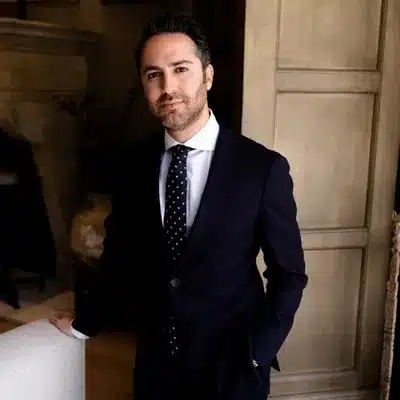
Interventional Psychiatry Training
– Peyman Tashkandi, Double Board Certified Child, Adolescent & Adult Psychiatrist, Dr. Peyman Tashkandi
Investing in continuing education and immersing myself in learning new treatment modalities has been one of the most rewarding decisions of my career as a psychiatrist. As we know, both medicine and technology are evolving at a rapid pace and change remains the only constant.
For example, during my residency training, interventional psychiatry modalities were neither mainstream nor widely taught. About two years after completing residency and beginning my career as an attending physician, I decided to learn about interventional treatments, particularly Transcranial Magnetic Stimulation (TMS) for treatment resistant depression and OCD. I pursued specialized educational courses and certifications and gained hands-on experience by working in a clinic that offered these modalities.
The return on that investment was significant. Not only was I among the new psychiatrists in my cohort trained in this modality, but I also gained a valuable new tool to help patients who had not responded to traditional therapies.
My decision was simple. I recognized that this treatment approach would become increasingly common, and not learning it would mean missing a vital opportunity. In that sense, the cost of staying the same far outweighs the cost of pursuing the training

Executive Coaching
– Anne Gillaspie, CEO & Chief Brand Strategist, Fix & Form | Strategic Branding Agency
My investment in executive coaching delivered the highest return on investment in my professional career. During these sessions, I discovered that childhood experiences had created a frugal mindset that was actually limiting my business growth potential, as I was reluctant to spend on marketing and operated solely through referrals. Identifying this barrier allowed me to make more strategic business investments in marketing programs that substantially expanded our client base. The timing was perfect because my business had plateaued, and coaching helped me recognize the psychological factors preventing me from taking necessary growth steps.

Leadership Workshops
– Arsen Misakyan, CEO and Founder, Angel City Limo
The greatest investment I made in my career was attending leadership/operations management workshops after ascending to Angel City Limo. I was a logistician, but I found out that leading as a dynamic leader required different qualities: the quality of communication and strategy. That program was a full-on revolution in my mindset around growth.
It’s also given me a way to organize my business on the day-to-day instead of drinking from the fire hose and, quite possibly most important, taught me how to lead with my team instead of managing the crap out of everything. I chose it because our business had been at that “tipping point.” And the return was almost immediate: less friction in work, happier staff members, and a better client experience.

Dementia Practitioner Certification
– Tanner Gish, Director of Operations, Loving Homecare Inc.
The Certified Dementia Practitioner (CDP) certification was the most impactful career investment for me. It provided in-depth knowledge and practical tools to better serve seniors and their families, especially in dementia and Alzheimer’s care. I determined it was the right investment at the time because I saw the growing need for specialized care in the aging population, and I wanted to ensure I could provide the best possible support. The certification deepened my expertise, which has been invaluable in my role as Director of Operations at Loving Homecare Inc., directly benefiting both my clients and my professional growth.

Massage Therapy License
– Erin Ruddy, Owner, Winston-Salem Massage and Bodywork
Becoming a licensed massage therapist was one of the best career investments I’ve ever made. It taught me not just technique, but presence, empathy, and the power of genuine connection. When I was deciding whether it was the right step, I asked myself three questions: Do I truly enjoy this and want to keep learning? Will this improve my life and the lives of others? And is this something that will help me not only now but in the next five years? When the answer was yes to all three, I knew it was worth it. That investment continues to pay off every day through the people I help and the purpose I feel in my work.
Skills-Based Investments
A different group of experts pointed to skills — not degrees — as the career investments that changed everything. Business storytelling, strong writing, digital marketing, Webflow development, and public speaking gave them tools they could use anywhere. What makes skills-based learning so powerful is how quickly it shows up in daily work: clearer communication, better client results, more polished projects, and a stronger personal brand. These experts often shared that mastering a single practical skill created momentum, making it easier to adapt, pivot, or grow within fast-moving industries.
High-ROI Skills That Transform Influence and Results
| Skill | Expert | ROI Snapshot | Decision Trigger |
|---|---|---|---|
| Master Business Storytelling | Brittney Simpson | Higher proposal approval rate | Gap in persuasion skills |
| Self-Taught Digital Marketing | Max Shak | Built scalable business, adaptable mindset | Opportunity to multiply results |
| Mastering Business Writing | Mohammad Haqqani | Secured funding with one-page proposal | Observed influence gap |
| Webflow Skills | Divyansh Agarwal | $7k in first 2 weeks, faster client delivery | Losing clients to agencies |
| Public Speaking Course | Pavel Khaykin | Increased confidence, project leadership | Weak presentation skills |
| UX Research & Conversion Training | Gabriel Shaoolian | Improved win rates, client ROI, long-term relationships | Gap in converting design into business results |

Master Business Storytelling
– Brittney Simpson, Founder & HR Consultant, Savvy HR Partner
The single career investment that delivered the highest return for me personally wasn’t a degree or a costly certification, but an intense, three-day Executive Storytelling Workshop—a piece of untraditional training I initially saw as fluff. I determined it was the right investment not based on market demand, but on a clear gap: my data and strategies were sound, but my ability to secure buy-in from skeptical executive teams was inconsistent. I realized that as a consultant, my most valuable product was not the solution itself, but my ability to narrate the need for change. The training taught me how to distill complex HR data into compelling, emotionally resonant narratives that bypassed logic and went straight to conviction. The immediate impact was that my proposal approval rate jumped, and more significantly, I earned a reputation as the consultant who could articulate the why behind the what. The key takeaway is to stop investing solely in technical skills and start investing in persuasion skills; the highest return comes from the one investment that makes all your existing technical expertise impossible to ignore.

One of the best career investments I ever made wasn’t a formal degree or a certification—it was a decision to learn digital marketing at a time when it was still considered a niche skill. Years ago, before I founded Zapiy, I was fascinated by how small shifts in online strategy could completely change a business’s trajectory. But I didn’t have the technical background. I remember setting aside evenings and weekends to dive deep into SEO, analytics, and automation. It wasn’t glamorous, but it was transformative.
At the time, most of my peers were investing in leadership programs or traditional business education. Those are valuable, of course, but what I saw in marketing technology was leverage—the ability to multiply results through smarter systems. I didn’t have endless resources, so I had to make each investment count. That made me ask: “What skill would give me the most control over growth, both personally and professionally?” The answer was clear—understanding how attention, technology, and human behavior intersect online.
That decision became the foundation for everything I’ve built since. It helped me approach business not just as a leader but as a problem-solver who could connect strategy to measurable results. When I later launched Zapiy, that same skill set allowed me to bridge gaps for clients struggling to modernize their marketing or streamline their operations.
What made that learning investment so valuable wasn’t just the skill itself—it was the mindset it created. It taught me how to stay curious, experiment constantly, and never wait for the “perfect” time to learn something new. I think that’s the mistake many professionals make—they view learning as a fixed stage in their career, rather than an ongoing process of reinvention.
If I could give advice to anyone wondering what to invest in next, I’d say this: choose something that expands your ability to adapt. Certifications and degrees are only as valuable as your willingness to apply them creatively. The real return comes when what you learn fundamentally changes how you think, not just what you know.

Mastering Business Writing
– Mohammad Haqqani, Founder, Seekario AI Resume Builder
In an era of relentless upskilling, professionals face constant pressure to acquire the next marketable credential. The prevailing logic suggests that our value is a direct reflection of the certificates and degrees we accumulate. This can lead to a frantic pursuit of formal validation, often overlooking the quieter, more foundational investments that yield the most durable returns over the long arc of a career. The most strategic choices are rarely the most obvious ones.
The single most valuable investment I made was not in a prestigious degree or a technical certification, but in a self-directed, rigorous study of effective business writing. This wasn’t about mastering grammar; it was about learning to structure a persuasive argument, distill complexity into a clear executive summary, and write emails that prompted action rather than ambiguity. While technical skills have a half-life, the ability to articulate a clear, logical position is an appreciating asset. It is the invisible infrastructure that supports every promotion, successful project, and leadership opportunity.
I recognized its necessity after observing that the most influential people in any room weren’t necessarily those with the deepest technical expertise, but those who could frame the problem most clearly. My own turning point came when a simple, one-page proposal I wrote was funded without a single meeting, a stark contrast to the lengthy, jargon-filled decks that were routinely ignored. It became clear that while specialized knowledge might earn you a seat at the table, the power to communicate with clarity is what determines whether anyone actually listens to what you have to say.

Webflow Skills
– Divyansh Agarwal, Founder, Webyansh
Learning Webflow in 2020 delivered the highest ROI for me–it cost literally $0 (just time) but generated $7k in the first two weeks after launching client projects. Before that, I was grinding through code trying to build websites the traditional way, which was slow and honestly killing my momentum as a freelancer.
I knew it was the right time because I kept losing clients to agencies that could deliver faster. I was decent at design and could code, but hand-coding every responsive breakpoint meant weeks per project. When I switched to Webflow, I suddenly could design AND develop simultaneously–one client project that would’ve taken me 6 weeks took 10 days, and the client paid the same rate.
The real compounding effect came from being able to say “yes” to bigger projects. Project Serotonin needed a complete website overhaul before their investor pitch, with tight deadlines and performance requirements. Old me would’ve declined or missed the deadline. With Webflow expertise, I delivered on time, they raised funding, and that case study alone brought in 3 more similar clients.
The key was that I was already talking to potential clients daily who needed exactly what Webflow solved–I just needed the tool to match the demand I was seeing.

Public Speaking Course
– Pavel Khaykin, VP of Marketing, NEYA
I was not wrong to opt for a public speaking course since it is the best career investment I have made. The course helped me gain confidence and learn how to express my perspective effectively. Additionally, the skills learned in the curriculum have been of value in every job I have held. My motivation in the course was my inability to deliver clear presentations and the knowledge that improvement would contribute to my growth. After the course, I was able to speak comfortably in meetings and express my thoughts. The skills I also harnessed from the program presented me with opportunities to lead projects and represent my team. Therefore, the course made a significant difference in my career.
UX Research & Conversion Training
– Gabriel Shaoolian, CEO and Founder, Digital Silk
The most impactful investment in my career was the in-depth, hands-on training I received in UX research and conversion strategy during the early days of my career. We could create beautiful sites, but we struggled to convert that design into actionable outcomes for the business because that was our bottleneck. I chose a program that pushed me into actual user interviews, task analysis, and messaging testing. I moved past theoretical. Within a few months of that training, our site audits and proposals changed from “it looks better” to “it reduces friction at steps A, B, and C,” resulting in improved win rates and client ROI.
The training paid for itself many times over in increased margins, increased long-term client relationships, and a playbook we still use in delivering strategic work for our clients. I knew it was a good decision because I could map our biggest gap to the skill that would solve it. I wasn’t just pursuing a certificate; I was putting myself in a position to offer a capability our clients required.
Entrepreneurial & Strategic Investments
Some professionals made career investments that were more strategic than academic. They outsourced bookkeeping to free up mental energy, enrolled in small business programs to sharpen their leadership instincts, taught architecture to refine how they explain ideas, or contributed to major systems work — like building Amazon’s internal processes. These weren’t just tasks; they were long-term decisions that expanded how they think about efficiency, scale, and the bigger picture. Many said that once they learned to invest in infrastructure and strategy, their business or career stopped feeling chaotic and started feeling intentional.
Strategic Career Moves That Multiply Returns
| Investment | Expert | ROI Snapshot | Decision Trigger |
|---|---|---|---|
| Outsourcing Bookkeeping | Margaret Phares | Recouped costs in 2 months, increased consulting revenue | Inefficient use of time |
| Small Business Program | Travis Bloomfield | Accelerated hiring velocity by 40%, optimized revenue | Growth uncertainty |
| Teaching Architecture | Dan Keiser | Built talent pipeline, stable income | Needed risk mitigation |

Outsourcing Bookkeeping
– Divyansh Agarwal, Founder, Webyansh
My highest-ROI investment was hiring a bookkeeper in year three of running PARWCC instead of doing it myself. I was spending 8-10 hours weekly on QuickBooks, tax prep, and expense tracking–time I could’ve spent on member services or certification development. Within two months of outsourcing for $400/month, I recouped that cost by closing three consulting contracts I wouldn’t have had bandwidth for.
I knew it was the right move when I calculated my effective hourly rate: I was making about $15/hour on bookkeeping tasks while my consulting brought in $150/hour. The math was brutal but honest. I ask our members to run this same calculation during year-end reviews–many find they’re working 80-hour weeks at $12/hour because they won’t delegate tasks that cost less than their revenue-generating work.
The lesson I share at our conferences: invest in whatever frees you to do only what you do best. For me, that meant paying someone else to reconcile receipts so I could build the certification programs that now serve 3,000 professionals. If a task drains you and someone else can do it for less than your billable rate, that’s not an expense–it’s a growth strategy.

Small Business Program
– Travis Bloomfield, Managing Partner & CEO, Provisio Partners
The Goldman Sachs 10,000 Small Businesses program I completed in 2025 gave me the biggest return–not because of theory, but because it forced me to document our actual unit economics and growth levers. Before that program, I was running Provisio on instinct and Air Force discipline. After, I had a financial model that showed us exactly where to invest to scale from boutique consultancy to the largest Salesforce partner in human services.
The timing was right because we’d hit that messy middle–too big to wing it, too small to hire a full finance team. I was spending weekends trying to figure out if we could hire two consultants or five, whether to expand into aging services or double down on housing. The program cost me zero dollars and ten weeks of intensive cohort work, but it gave me frameworks that turned those gut-feel decisions into math I could actually defend to my team.
The immediate ROI showed up in our hiring velocity. Within six months of graduating, we went from adding 2-3 people per year to confidently scaling our technical team by 40% because I finally understood our revenue per consultant and could model growth scenarios. More importantly, I stopped leaving money on the table–we restructured our service packages based on actual delivery costs rather than what felt right.
What made me commit was watching other veteran-owned businesses in my Bunker Labs network struggle with the exact same growth questions I had. When several of them mentioned Goldman Sachs transformed how they thought about scaling, I applied immediately. Best decision was picking a program that was peer-based rather than just lectures–the cohort accountability kept me from bailing when the financial modeling got uncomfortable.

Teaching Architecture
– Dan Keiser, Principal Architect, Keiser Design Group
The highest-return investment for me was teaching high school architecture at Gahanna Lincoln for nine years starting in 1999. I stumbled on a newspaper ad (rare for me to even read the paper), and it let me build KDG on the side while getting paid to shape future architects. That teaching income stabilized my cash flow during the early years when client work was unpredictable.
But the real ROI wasn’t the paycheck–it was the pipeline. My students became my interns, then my employees, then industry connections across the country. Jason McGee was in my second class, interned with me in high school, and is now leading our commercial projects. Nate Substanley came through the program and manages all our residential work with Schottenstein Homes today.
I knew it was the right move because it solved two problems at once: I needed stable income to take risks with KDG, and I was already volunteering at career days anyway because I loved talking to students. The alignment was obvious. When you can get paid to do what you’d do for free AND it feeds your business long-term, that’s not really a gamble.
My advice? Look for opportunities where you’re the only one who benefits twice. Teaching gave me income and a talent funnel that’s still paying dividends 25 years later.
Hands-On Experiential Investments
A few experts found their biggest returns through doing — not studying. Real-world, messy, hands-on experience ended up being the most memorable career investments of all. Working the hospitality floor taught them patience, people skills, and how to stay calm under pressure. Launching a podcast showed them how to create something from scratch, ask better questions, and build an audience one episode at a time. These experiences weren’t glamorous, but they shaped instincts, confidence, and resilience in a way no classroom ever could. And for many, that practical wisdom is what continues to move their careers forward.
Real-World Experience That Pays Dividends
| Experience | Expert | ROI Snapshot | Decision Trigger | Story Placement |
|---|---|---|---|---|
| Hospitality Experience | Janice Kuz | Staff retention, operational efficiency | Learned systems firsthand | Quote block |
| Podcast Launch | Gabe Petersen | 600 mentors, network expansion | Direct access to experts | Quote block |
| Coaching Training | Jim Hickey | Formalized mentorship, expanded impact | Natural talent for mentoring | Quote block |

Hospitality Experience
– Janice Kuz, Owner, Flinders Lane Cafe
Honestly? Working the floor. Not a course or certification–just 20+ years of being in the trenches slinging coffee, managing chaos during Saturday morning rushes, and learning what actually makes customers come back versus what sounds good on paper.
When I opened The Nines in 2015, I didn’t hire consultants or take hospitality management courses. I invested time into working every single station myself first–making the coffees, plating the dishes, running the pass. That hands-on knowledge meant when we hit problems (and we did), I knew exactly where the breakdown was and how to fix it fast.
The ROI? Our retention is insane. Fletcher started washing dishes 5 years ago and now runs the place. George has been pouring coffee for 3 years and people drive across the coast for her brews. I can’t teach that kind of loyalty from a textbook–it comes from building a culture where I genuinely understand what each team member deals with daily.
My advice: skip the expensive courses early on and invest your hours working alongside your team. You’ll spot inefficiencies, build respect, and learn what your business actually needs versus what some consultant thinks it needs. I tweak our menu and operations constantly because I’m still in it, not watching from an office.

Podcast Launch
– Gabe Petersen, Founder, The Real Estate Investing Club Podcast
The best career investment I’ve ever made—hands down—was starting my podcast.
When it comes to personal and professional growth, I believe the highest-return investments are the ones that let you learn directly from people who’ve already achieved what you want to achieve. For me, launching an interview-based real estate podcast was the ultimate version of that.
Since starting The Real Estate Investing Club, I’ve recorded over 600 interviews with investors, entrepreneurs, and industry experts who are far more experienced than I am. That means I’ve essentially had 600 mentors, each sharing hard-earned lessons in a one-on-one setting. The education alone has been invaluable.
Beyond that, the podcast helped me build a personal brand, expand my network, and open doors to partnerships and deals I never would have found otherwise. Without question, starting that podcast was the single best investment I’ve ever made in my career.

Coaching Training
– Jim Hickey, President, Perpetual Talent Solutions
Retraining as a career coach felt like a natural next step for me, even if I didn’t fully see it coming at first. For years at Perpetual Talent Solutions, I’d find myself lingering on the phone long after the initial connection was made. Folks would ask for advice on navigating imposter syndrome, or whether they were making a move for the right reasons, or how to rebuild confidence after getting passed over. I realized I wasn’t just talking people into jobs; I was helping them through career crossroads.
So, for me, investing in coaching training was simply about formalizing the work I was already doing, and then going further to impact the entire trajectory of a candidate’s career.
Sometimes, it’s helpful to look not for a pivot, but an extension of your talents when it comes to career investment.
Key Takeaways from Experts
- High ROI comes from real-world impact, not just credentials.
- Invest in self-knowledge first—clarity on strengths can save years of misdirected effort.
- Leverage delegation and outsourcing to focus on revenue-generating activities.
- Hands-on experience often beats formal education in applicability and insight.
- Specialized skills and certifications solve specific gaps, providing tangible results.
- Soft skills—storytelling, writing, public speaking—amplify all other expertise.
Conclusion & Actionable Advice
The highest-return career investments aren’t always the most obvious. They often combine timing, personal stakes, and alignment with real challenges.
Ask yourself:
- Does this investment address a real problem I’m facing?
- Will it unlock opportunities I otherwise can’t access?
- Does it push me beyond comfort into tangible growth?
By making strategic career investments like the ones highlighted here, you can accelerate your professional trajectory and gain skills that compound over a lifetime.
Next Step: Identify one high-ROI investment you can start today. Document your goals, expected outcomes, and timeline. Treat your career like a portfolio—invest wisely and watch it grow.

Amit is a lifelong learner and advocate for personal growth, fueled by 15+ years in HR across various functions. His journey includes a dual Master's degree: an MBA specializing in HR and Information Technology, and another Masters dedicated to HR Management & career development. This blend of knowledge allows him to translate personal development strategies into actionable steps. Whether you're seeking career advancement or simply becoming your best self, Amit is here to share insights, tips, and inspiration to help you unlock your full potential.