

Last month, a senior executive sat across from me and said, “On paper, this is everything I ever wanted. So why do I feel nothing?”
No crisis. No toxic boss. No dramatic life event. Just a quiet, grinding loss of motivation and a strange emotional flatness after each new win.
If you’ve ever hit a big goal and felt disturbingly underwhelmed, nothing is wrong with you psychologically. Something very predictable is happening in your brain. As I’ve discussed before on Stunning Motivation in my article on how your brain can sabotage your career motivation, this is a common challenge for high performers.
What you’re running into is not a mindset problem or a discipline problem. It’s a dopamine driven motivation neurology of motivation problem—specifically, how dopamine drives motivation in ways that make achievement feel compelling, but often leave satisfaction behind.
Neuroscience and Motivation: Why the Chase Feels Better Than the Win
Most people have been taught that dopamine is the “pleasure chemical.” It’s not.
Dopamine is the anticipation and motivation chemical. It spikes when your brain predicts that something good might happen if you move toward it—not when you’re already enjoying it.
When you’re chasing a promotion, building a company, or training for a goal, dopamine rises in key regions like the ventral striatum and nucleus accumbens. Those circuits sharpen focus, increase energy, and make the next step feel urgent and rewarding. This is dopamine driven motivation at work.
But when you finally “arrive”—the title change, the sale, the milestone—dopamine activity drops back down. Other chemicals (opioids, serotonin, oxytocin) briefly create a softer feeling of satisfaction, but your dopamine system has already started scanning for the next target.
From the brain’s perspective, the chase is the point. The win is just data: Did this reward match my prediction, or should I adjust my expectations next time?
The Brain and Motivation: Built for Scarcity, Living in Abundance
Our motivational circuitry evolved in an environment of scarcity.
Ancient brains didn’t care about “career fulfillment.” They cared about food, safety, status inside a small tribe, and chances to pass on genes. Dopamine systems pushed our ancestors to keep moving, scanning, hunting, and solving problems—never fully satisfied for long.
Today, that same brain and motivation machinery is dropped into a world of constant stimulation and near-infinite rewards: promotions, notifications, metrics, followers, purchases, content, and opportunities. Yet the dopamine system hasn’t caught up.
The result is a predictable pattern for high performers:
- You hit a big goal; dopamine quickly “normalizes” it and moves on
- Your baseline for what counts as exciting keeps rising
- You find yourself chasing more, faster, bigger—yet feeling less each time
This is what neuroscientists and psychologists refer to as the dopamine paradox of wanting vs liking: the brain’s “wanting” system (dopamine) keeps intensifying while the “liking” system (true enjoyment and contentment) stays brief and modest.
It’s not a character flaw. It’s an evolutionary mismatch.
How Dopamine Affects Motivation in the Brain (And Why High Achievers Feel Empty)

The infographic above visualizes this exact distinction. The left panel shows the wanting system’s electrical urgency—discrete dopamine bursts driving you forward. The right shows the liking system’s pleasure-generating hotspots, far smaller and more localized than most people realize.
To really understand how dopamine affects motivation in the brain, it helps to separate two systems:
- Wanting system (dopamine-driven):
- Future-focused, anticipatory, restless
- Lives in circuits connecting midbrain regions to the ventral striatum and parts of the prefrontal cortex
- Makes goals feel urgent and energizing
- Liking system (pleasure/contentment):
- Present-focused, subtle, slower
- Relies more on endogenous opioids, endocannabinoids, and serotonin
- Creates brief waves of genuine enjoyment and calm
Specifically, activation of opioid receptors in the nucleus accumbens medial shell and ventral pallidum—visible on the right side of the infographic above as the small, focused golden hotspots—creates the literal sensation of pleasure. This is distinct from dopamine’s role. Dopamine creates the urge to move toward something. Opioids create the actual experience of liking it. Two completely different neurochemical events.
Most high performers have built incredibly strong “wanting” pathways—years of pushing, striving, and proving wire those circuits to fire fast and hard. But they rarely invest in training the “liking” side: slowing down, savoring, anchoring a win in memory, or letting success actually land.
In my work with executives, founders, and creatives, the pattern is almost always the same: powerful dopamine drive motivation, weak satisfaction circuits. You get excellence in output—and a chronic sense of inner deficit.
Dopamine Pathways, Motivation Neuroscience, and the Quiet Cost of Overdrive
The story becomes more complicated when we look at specific dopamine pathways motivation neuroscience has mapped. Different circuits support different aspects of motivation, discipline, and daily drive:
- Mesolimbic pathway (VTA → nucleus accumbens): The core “seeking” circuit, driving reward pursuit and novelty
- Mesocortical pathway (VTA → prefrontal cortex): Supports planning, goal evaluation, and self-control
- Nigrostriatal pathway: Coordinates movement and habit routines, turning effort into automatic action
If you’re a high achiever, your mesolimbic pathway (the ‘seeking’ circuit) is likely overdeveloped—years of chasing have made it extremely responsive. Meanwhile, your mesocortical pathway (planning and self-control) often gets depleted first under stress, leaving you driven but foggy.
Under chronic stress, overload, or nonstop pursuit, these pathways don’t all suffer equally. Stress hormones (like cortisol) blunt dopamine receptor sensitivity in the prefrontal cortex first, which means your planning and self-regulation systems start to sputter while the raw urge to push and chase may still be active.
This is why you can feel simultaneously:
- Driven and restless (mesolimbic still pushing for “more”)
- Foggy, indecisive, or disorganized (mesocortical depleted)
- Physically exhausted or frozen (nigrostriatal under-firing)
That combination—high urge, low clarity, and low energy—is the signature of many modern burnout stories. It’s not “weak willpower.” It’s the neuroscience of drive and discipline motivation under strain.
Sustaining Motivation, Brain Chemistry, and Dopamine: You Can’t Out-Hustle Your Neurobiology
Once you understand this, a hard truth becomes obvious: you can’t “out-hustle” a misaligned dopamine system.
Trying to fix a deep motivation and brain imbalance with more effort, more systems, or more pressure is like trying to fix a software crash by clicking faster. The underlying hardware—your circuits and chemistry—needs a different approach.
From a sustaining motivation brain chemistry dopamine perspective, three realities matter most:
- Chronic overstimulation downregulates dopamine receptors.
- Constant pings, metrics, crises, and “urgent” goals make receptors less sensitive over time.
- What once felt exciting now barely registers, pushing you to escalate intensity just to feel normal.
- Constant pings, metrics, crises, and “urgent” goals make receptors less sensitive over time.
- Recovery is not optional; it is a neurological requirement.
- Deep sleep, physical movement, and regular deactivation time allow receptors to reset and circuits to repair.
- Without adequate sleep and deactivation time, dopamine receptors don’t replenish their sensitivity. You’re not being weak by resting—you’re performing essential neurobiology. Rest isn’t the opposite of productivity; it’s the maintenance cycle productivity requires.
- Deep sleep, physical movement, and regular deactivation time allow receptors to reset and circuits to repair.
- Alignment beats intensity.
- Dopamine is more robust when goals are tied to intrinsic meaning, autonomy, and contribution—not just external markers.
- When you pursue goals for external validation (money, status, titles), your brain activates dopamine circuits that are inherently more fragile and prone to downregulation. You need constant escalation to feel anything. But when goals align with your intrinsic values, you’re engaging different dopamine pathways—ones that are more stable, more sustainable, and connected to deeper reward circuits. The “impressive” external goal leaves you empty because your brain was never designed to find lasting satisfaction in someone else’s definition of success.
- When your goals contradict your values, your brain quietly resists, no matter how “impressive” they look.
- Dopamine is more robust when goals are tied to intrinsic meaning, autonomy, and contribution—not just external markers.
Neuro Motivation in Practice: Three Brain-Based Shifts That Change Everything
Here are three practical, neuroscience-backed shifts that transform neuro motivation from white-knuckled willpower into something more stable and self-renewing:
1. Design for Micro-Wins, Not Massive Leaps
Your dopamine system responds to progress more reliably than to perfection. Breaking work into micro-wins creates a series of accurate “better than expected” signals, which release dopamine in small but sustainable pulses.
- Turn “finish the proposal” into “outline the three main points”
- Turn “get in shape” into “walk for 10 minutes after lunch”
- Turn “fix my entire calendar” into “protect one 90-minute focus block this week”
Each completion teaches your motivation and brain circuitry that action is worth the effort. Over time, micro-wins rewire your relationship to hard work—from dread to tolerable, then sometimes even to satisfying.
2. Build a Dopamine Menu Instead of Living on Autopilot
Rather than treating motivation as something you either “have” or “don’t,” treat it as something you can design using what Dr. Ceruto calls a Dopamine Menu—a curated set of activities that reliably support your unique brain.
Your menu might include:
- Movement that genuinely energizes you (not just what you think you “should” do)
- Foods that stabilize blood sugar and support dopamine synthesis
- Social rituals that leave you feeling more alive, not more drained
- Creative or challenge-based activities that give you healthy novelty
Over time, you learn which combinations reliably lift your baseline and which quietly drain it.
Explore this in depth here:
Build Your Dopamine Menu: Rewire For Sustained Happiness
3. Use Detox Strategically, Not as Punishment
“Dopamine detox” is often sold as a magic reset. The science is more nuanced. You can’t switch off dopamine, but you can create structured breaks from high-intensity stimulation so receptors stop being hammered every minute.
Strategic detox done well looks like:
- Intentionally boring windows (no phone, no email, no rapid-fire novelty)
- Effort-based rewards (walking, cooking, creating, or calling a friend) instead of quick digital hits
- Regular cycles (for example, one evening a week + one longer block monthly)
This doesn’t “purify” your brain. It gives your system a chance to remember that low-intensity, real-world rewards are still worth caring about.
A science-grounded guide lives here:
Dopamine Detox: Neuroscience-Based Approaches for Resetting Your Brain
The Dopamine Code: A New Model for Neuroscience and Motivation
All of these ideas—and many more—come together in The Dopamine Code, my upcoming book that translates cutting-edge neuroscience and dopamine-driven motivation research into plain language and practical frameworks.
Instead of promising quick hacks, The Dopamine Code shows you:
- Why you can achieve everything and still feel emotionally flat
- How the brain’s pleasure–pain balance quietly shapes energy, focus, and resilience
- Why standard self-help advice often backfires on a dopamine-depleted brain
- How to build your own Dopamine Menu and environment design plan
- How trauma, chronic stress, and modern work culture reshape dopamine pathways—and how to repair them thoughtfully
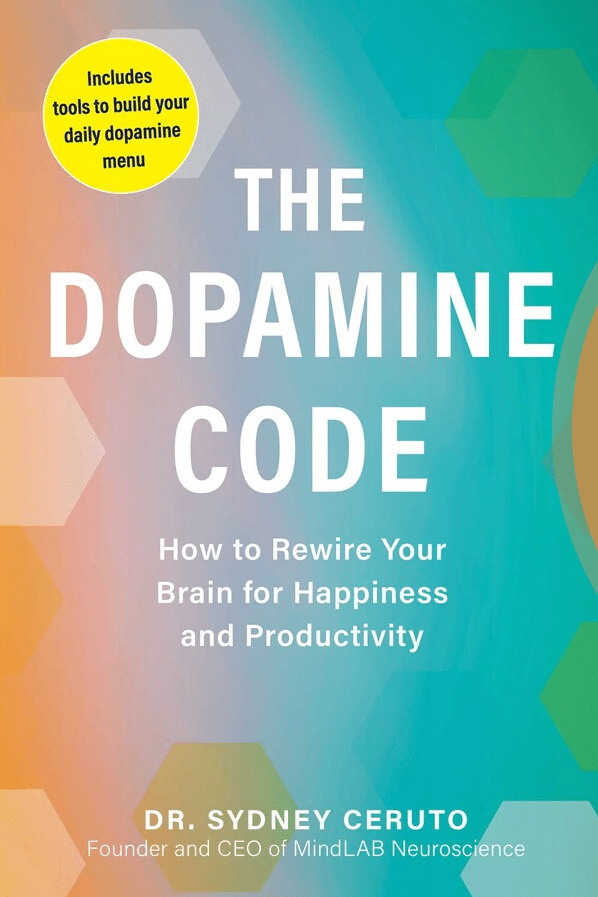
Pre-Order The Dopamine Code
If this article describes your experience—high achievement on the outside, restless emptiness on the inside—The Dopamine Code is the deeper roadmap.
Pre-order here from Amazon: THE DOPAMINE CODE
Consider this book your field guide to neuro motivation: it explains, with compassion and rigor, how your brain got here—and how to build a life that finally feels as good as it looks.
FAQ – Neuroscience of Drive and Discipline Motivation
Q: Is dopamine really the reason I never feel satisfied with my success?
A: Dopamine isn’t the only factor, but it plays a central role. It drives wanting far more than liking, which means your brain is wired to feel energized by pursuit more than by arrival. When you combine that with modern overstimulation and chronic stress, you get the exact pattern of “I achieved everything and still feel empty.”
Q: What’s the difference between “dopamine driven motivation” and ordinary motivation?
A: All motivation has a biochemical side, but dopamine driven motivation is specifically about the circuits that light up when your brain predicts a reward and pushes you toward it. When those circuits are healthy, you feel energized and purposeful. When they’re depleted or overstimulated, you feel flat, restless, or compulsively driven without genuine satisfaction.
Q: Can I really change my motivation by changing habits and environment?
A: Yes. Because of neuroplasticity, repeated behaviors, thoughts, and environmental patterns literally reshape dopamine pathways over time. Strategic changes—like micro-wins, structured recovery, and a personalized Dopamine Menu—can make motivation more automatic and less dependent on brute-force willpower.
Q: Do I need to quit my job or make a huge life change to fix this?
A: Not necessarily. For many high-achievers, the turning point comes from redesigning how they work, not abandoning what they do. Introducing autonomy, novelty, social connection, and clear progress markers can reactivate dormant motivation circuits even in the same role.
Q: How is this different from depression or a mood disorder?
A: Depression, anxiety, and other mood disorders involve dopamine but also many other systems. Feeling flat after achievement doesn’t automatically mean you’re clinically depressed—but persistent loss of pleasure, energy, or drive is a signal worth taking seriously. A clinician can help you distinguish between dopamine depletion, burnout, and true mood disorders.
Q: Where should I start if I feel burned out and unmotivated?
A: Start where your brain resets: sleep, light, movement, and low-intensity social contact. Then add micro-wins and small, realistic changes to your work structure. If you want a structured approach grounded in neuroscience, The Dopamine Code and the Dopamine Menu article are designed as starting frameworks rather than quick fixes.
Learn More: The Brain and Motivation in Real Life
If you want to keep exploring how motivation and brain science apply to your career, relationships, and well-being, these pieces build naturally on what you’ve just read:
Dopamine Boosting Foods for Brain Health: Unlocking Nutrition’s Secret to Motivation and Focus
Dopamine Addiction: How the Brain Gets Hooked and How to Break Free
Dopamine-Aware Leadership: Neuroscience for Motivating Teams
Dopamine and Relationships: The Neuroscience of Love
Dopamine Workplace Performance: Neuroscience Insights

Dr. Sydney Ceruto is a cognitive neuroscientist and the Founder & CEO of MindLAB Neuroscience. For more than two decades, she has worked with executives, entrepreneurs, and high performers to align their brain and motivation systems with the lives they actually want to live.
Her upcoming book, The Dopamine Code, distills years of clinical work and cutting-edge research into a practical blueprint for rewiring dopamine pathways—with science, not shortcuts.