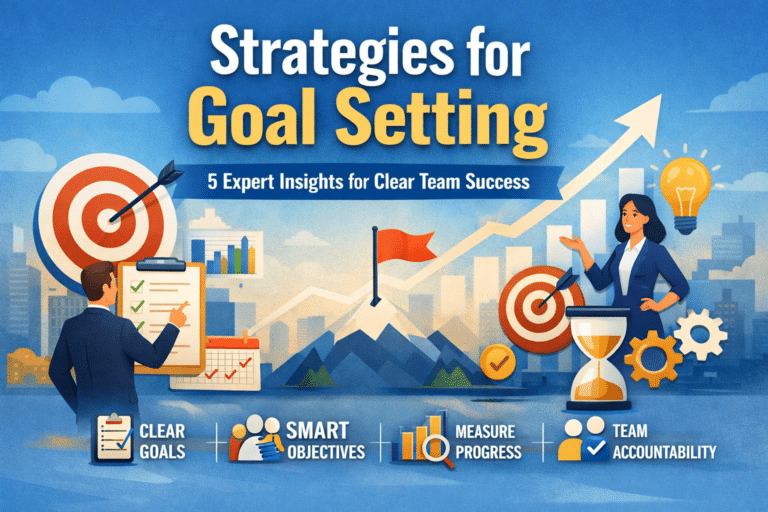
More employees expect leaders to give teams more ownership while ensuring strong, consistent results. You must balance trust with accountability and refine how you communicate expectations to ensure consistency across different working styles. Modernizing management style requires rethinking communication, autonomy and how you define high performance in flexible work environments.
Adopt Flexible Work Approaches Without Losing Discipline
Hybrid work and results-driven environments require you to rethink how your team operates. You need to set clear boundaries and establish measurable goals so flexibility does not lead to confusion or inconsistency.
Google implements a 20% time policy that allows employees to spend up to one day each week on independent projects, which encourages innovation while maintaining core responsibilities. This approach demonstrates how you can give your team freedom without losing structure or focus. Pairing flexibility with accountability can increase productivity by fostering trust and alignment around clear objectives.
Build a Culture of Ownership and Responsibility
Shared accountability across your team ensures that everyone takes ownership of outcomes rather than relying solely on individual effort. You create stronger collaboration when you encourage knowledge sharing, as studies show that creativity increases and employees experience greater joy when they learn from each other and exchange ideas.
Define clear roles and expectations to prevent performance gaps. This clarity helps your team understand how their work connects to larger objectives. Aligning individual contributions with your business goals builds a more cohesive, motivated and high-performing team.
Redefine What High Standards Look Like Today
Standards now focus on outcomes and continuous improvement, which requires you to evaluate performance based on results rather than rigid processes. Traditional metrics often emphasized hours worked and strict adherence to procedures, while modern workflows prioritize impact and the ability to adjust to change.
You should set clear expectations around goals and deliverables, so your team understands what success looks like. Simultaneously, granting flexibility in how work gets done to give your team space to innovate while still meeting the high standards. This approach ensures your team remains agile while consistently delivering measurable results.
Strengthen Communication Skills Through Structured Training
Shifting from micromanagement to structured, transparent communication allows you to guide your team without constant oversight. Effective communication under pressure — delivering difficult feedback, adapting to different personalities, navigating conflict — requires deliberate skill development that many leaders never receive.
Dedicated communication training programs offer frameworks that self-directed learning often cannot. For example, The Center for Leadership Studies developed the Situational Leadership® Model to help adapt leaders’ communication based on each team member’s competence and commitment level, while Dale Carnegie Training focuses on interpersonal fundamentals like active listening and confidence building, and FranklinCovey delivers principle-based programs that tie communication directly to execution and accountability.
Once communication skills are strengthened, regular check-ins and consistent feedback loops keep everyone on track. When expectations remain visible and measurable, teams understand priorities without needing constant monitoring.
Empower Autonomy While Maintaining Accountability
Trust-based leadership increases motivation and ownership by giving your team the confidence and responsibility to take initiative and deliver results. You can set ambitious team goals to create excitement, but each individual still needs achievable targets to stay engaged and accountable.
This balance ensures motivation remains strong at every level while supporting overall performance. Autonomy does not mean a lack of structure, as you still need clear expectations and measurable outcomes. You can reinforce this by using goal-setting frameworks and defined metrics that guide performance while allowing flexibility in how team members do their work.
Invest in Continuous Feedback and Growth
You can replace annual reviews with ongoing performance conversations that keep your team aligned and continuously improving throughout the year. You should provide real-time feedback and recognition, so your team understands what works and where to adjust without delay.
This approach helps you address challenges early and reinforce positive behaviors as they happen. Focusing on development rather than evaluation strengthens your team’s skills and confidence over time, letting standards rise as your team grows and improves. It also creates a culture where continuous learning becomes part of the daily workflow.
Use Technology to Enhance Leadership
You can use communication and performance-tracking tools to keep your team aligned without relying on constant supervision. Platforms for messaging and project management can provide real-time visibility into progress, which helps you monitor outcomes rather than activities. This level of transparency reduces the need for micromanagement because your team’s work remains visible at all times.
With 60% of companies implementing software or technology to automate tasks previously handled by employees, you can use it to streamline routine processes and reduce manual workload. This allows you to shift your focus toward strategic leadership and team development instead of daily task oversight.
Modern Leadership That Balances Flexibility and High Standards
Modernizing your management style strengthens your effectiveness without lowering standards. By balancing flexibility with accountability and maintaining clear expectations, you enable your team to deliver consistent, high-quality results. When you adapt your leadership approach to meet today’s workforce expectations, you can stay relevant and create lasting impact.

Eleanor Hecks is a business and leadership writer whose work is featured on sites like Fast Company and HubSpot. She currently serves as Editor-in-Chief of Designerly Magazine, an online publication focused on design, business and marketing insights.